Few countries in the world face agricultural challenges like those in Brazil — and none have developed biological solutions on the same scale. More than four decades of applied research in tropical soils have generated a scientific asset that the world is learning to value: bioinputs that work in the planet's most demanding conditions.
The first inoculants for soybeans arrived in the 1960s. In the 1980s, one of the world's first regulatory frameworks for agricultural microorganisms was established here. The practical result is visible in the field today: in Brazilian soybeans, inoculation with nitrogen-fixing bacteria supplies roughly 90% of the nitrogen the crop needs — eliminating, at scale, the use of synthetic nitrogen fertilizer. According to peer-reviewed research led by Embrapa scientist Mariangela Hungria, this process alone saved Brazil an estimated US$ 15.2 billion in fertilizer costs in the 2019–2020 season.
Bioinputs in Brazil do not operate in isolation. They are part of an integrated pest management (IPM) system that combines monitoring, good agronomic practices, biotechnology, and, when necessary, conventional pesticides. This integration is what makes Brazilian solutions both scalable and replicable.
What works in Brazil's tropical scale tends to work in any agriculture operating under similar climate pressure — which is where much of the world's productive expansion is concentrated today.
of soybean nitrogen supplied by biological inoculation.
Vermelho et al., JIA 2026
of bioinputs history in Brazil.
APD / Embrapa, 2025
saved per year through soybean inoculation alone.
Hungria et al.
Brazil currently treats 194 million hectares with biological solutions — a new historical record, representing growth of more than 28% over 2024. The market reached R$ 6.2 billion (US$ 1.2 bi) in value in 2025, driven by adoption that advances on two fronts simultaneously: planted area continues to expand, and management is intensifying — more products, more applications, and more strategic mixtures between biologicals and chemicals.
The country achieved these results through a combination that is not easily replicated: decades of applied public research, a private sector that invested early in dedicated industrial infrastructure, and large-scale agriculture that demands products which work in practice. Brazilian producers now use bioinputs as a structural management tool — not as an emergency alternative.
Embrapa maintains germplasm banks with more than 10,000 strains for biocontrol and 14,000 for nutrient fixation. Companies in the sector have invested in specific fermentation, formulation, and logistics infrastructure for living products. This ecosystem is what guarantees that Brazilian bioinputs work integrated into management, delivering measurable field results. Adoption was not imposed by regulation — it was driven by performance.
in market value in 2025 — a new historical record (+15% vs R$ 5.4 billion in 2024).
CropData / CropLife Brasil, March 2026
treated with bioinputs — a 28% growth in treated area.
CropData / CropLife Brasil, March 2026
new bioinput registrations granted in 2025 — the highest number on record.
CropLife Brasil
growth in treated area — the largest expansion in the historical series.
CropData, March 2026
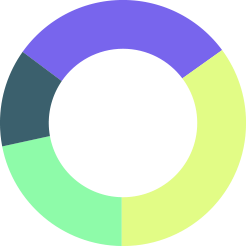
976 thousand ha in 2025
831 thousand ha in 2023
Source: CropData / CropLife Brasil — Quarterly Bulletin, March 2026.

A data platform dedicated to the Brazilian bioinputs market.
The effectiveness of a bioinput depends on how it was developed, tested, and produced. This chain — from strain selection to field delivery — is where the difference between a generic product and true technology becomes visible.
In Brazil, a commercial bioinput is evaluated by three independent regulatory bodies before reaching the market: MAPA (Ministry of Agriculture) verifies agronomic efficacy; IBAMA (Brazilian Institute for the Environment and Renewable Natural Resources) evaluates environmental risk; and ANVISA (Brazilian Health Regulatory Agency) analyzes human health safety. Strains must come from accredited germplasm banks with precise molecular identification. Production follows Good Manufacturing Practices (GMP) with full batch traceability.
In 2024, CropLife Brasil published the world's first guide dedicated exclusively to Good Manufacturing Practices for bioinputs. In December of the same year, Brazil enacted Law No. 15,070/2024 — establishing one of the world's most comprehensive regulatory frameworks for the sector, with rules specifically designed for the registration, production, and use of agricultural bioinputs.
This combination of robust regulation, batch traceability, and field validation is what sustains the trust required for Brazil's competitive entry into the international bioinputs market.
Purity and absence of contaminants. Strains sourced from accredited germplasm banks (requirement of Law No. 15,070/2024).
Under real Brazilian field conditions.
With traceability from the original microorganism to the final product.
MAPA (efficacy) + IBAMA (environment) + ANVISA (human health).
More than 130 products approved for use in organic agriculture.
Source: Law No. 15,070/2024; CropLife Brasil / Agricultural Bioinputs Quality Manual Development Guide, 2024.
In December 2024, Brazil enacted Law No. 15,070 — the world's first legal framework dedicated exclusively to bioinputs. It creates a distinct regulatory framework for agricultural biological products, separate from pesticide and fertilizer legislation. It allows a single registration for multi-functional products and provides specific rules for on-farm production.
Source: Law No. 15,070/2024; Insper Agro Global; CropLife Brasil.