
Bioinputs Market Reaches BRL 6.2 Billion in Sales and Treated Area Grows 28% in 2025
Record adoption covers 194 million hectares; the sector's unprecedented performance is the result of integrated pest management and the search for more sustainable practices in the field.
The bioinputs market broke through the BRL 6.2 billion mark in 2025, a 15% increase compared with the previous year's market value. In the same period, the area treated with biological products reached 194 million hectares, up 28% from 2024. This unprecedented performance reflects the expanded use of these technologies in the field, driven by integrated pest management and the search for more efficient and sustainable systems.
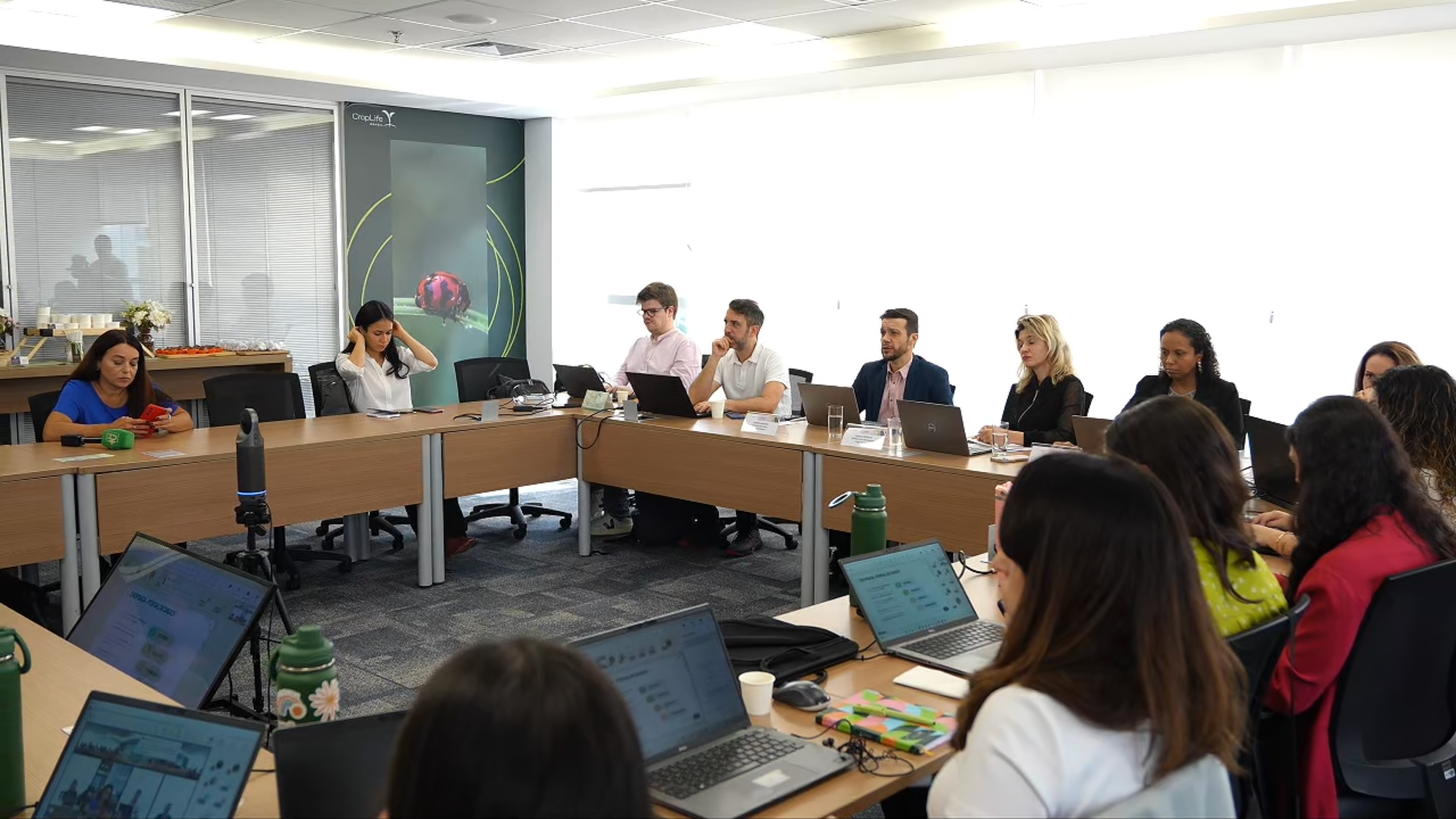
The updated data and analyses were released during a press conference held by CropLife Brasil (CLB) in Sao Paulo and are available on CropData, the organization's data platform.
"Those who follow agriculture know that producers face several challenges, such as commodity price variability, product price fluctuations and high interest rates, which are cyclical challenges linked to the country's economic and sectoral situation. There are also structural challenges in production, connected to the growing pressure for more sustainable solutions in the field. Bioinputs emerge precisely in this context, as a viable and integrated technology for achieving more sustainable production," said Renato Gomides, executive manager at CLB.
The growth of biological inputs in the field is linked to a set of factors, including the professionalization and expansion of the industry, the need to combat resistant pests through the integrated management of chemical and biological inputs, the search for sustainable solutions for crops and greater adoption of the products, through repeated applications or mixtures.
Segments
CropLife Brasil monitors four segments within the bioinputs sector: biofungicides, bioinsecticides, bionematicides and inoculants. Regarding treated area in 2025, the distribution by segment was: inoculants (40%), bioinsecticides (24%), bionematicides (23%) and biofungicides (13%).
Inoculants - nitrogen-fixing bacteria - were present on 77 million hectares last year, demonstrating the role of this solution in the country's transition to low-carbon agriculture. In terms of year-over-year performance, the highlight was bionematicides, which expanded by 16 million hectares, approximately 60%, from 2024 to 2025, consolidating themselves as a mature market integrated into sustainable management protocols.
"Bioinputs are no longer a trend and are increasingly becoming a reality in the field, reflecting farmers' confidence in the use of this technology. Looking at growth over the three-year period from 2022 to 2024, we already saw an increase of around 15% per year. In 2025, growth reached 28% compared with the previous year, setting a record of 194 million hectares. The main highlight is bionematicides, which increased 60% in treated area, adding 16 million hectares in the year. This progress shows how adoption has been accelerating, especially in large-scale crops," said Amalia Borsari, CLB's director of bioinputs.
In terms of the market value of biological inputs in 2025, the growth trend is equally relevant, with different segments standing out. The market-value ranking is: bioinsecticides (35%), bionematicides (30%), biofungicides (22%) and inoculants (13%). The biofungicide segment, which includes microorganisms such as bacteria and fungi, recorded the strongest growth in value, rising 41% and reaching BRL 1.4 billion. The technology has been used to control complex diseases such as white mold and rust.
Performance by crops and states
Among crops, soybeans (62%), corn (22%) and sugarcane (10%) are the most consolidated in the use of bioinputs. In addition, a group of other crops, such as cotton, coffee, citrus and fruit and vegetables, accounts for approximately 6%.
Mato Grosso is the state with the highest use of bioinputs, driven by soybean cultivation, where inoculants are adopted on 90% of the crop area. Sao Paulo and Goias rank second and third among the largest bioinputs markets, with 17% and 14% of treated area using the technology, respectively. Sao Paulo's performance is driven by sugarcane and citrus. The MATOPIBA region - Maranhao, Tocantins, Piaui and Bahia - an expanding grain production belt, represents 11%.
"The outlook for biological crop protection products is promising, as shown by the 2025 panorama. Producers already understand the importance of the technology, which complements the practices adopted for crop protection," concluded Renato Gomides, executive manager at CLB.
CropData
CropData is CropLife Brasil's data platform, bringing together, for the first time and in one place, information on the seed, bioinputs and chemical sectors. It includes revenue, credit, tax and research and development (R&D) figures for agricultural technologies, as well as indicators on markets, foreign trade, ESG, jobs and wages, product registrations and use in hectares.
Beyond consultation and the democratization of access to sectoral data, CropData aims to provide transparency for the field-solutions sector, promote the industry's foundations and expand public access to strategic information on Brazilian agribusiness.
The press conference on bioinputs market monitoring will be available on CropLife Brasil's YouTube channel.
The sector analysis and trends based on the data incorporated into CropData are available in the 2nd Market Bulletin.
Original Source: CropLife Brasil article