Integrated pest management (IPM) is being rethought globally. The combination of biological, chemical, and cultural tools — used strategically based on real pest pressure and crop conditions — has become the technical benchmark adopted by farmers and distributors in the world's major agricultural markets. In this context, bioinputs have moved from a niche category to an essential component of any modern crop protection portfolio.
The market reflects this shift: from US$ 6.3 billion in 2020 to US$ 8.65 billion in 2024, with a projection to reach nearly US$ 14 billion by 2030. Growth is happening in all regions — and it is most accelerated precisely where climatic conditions resemble those in Brazil.
Brazil built its knowledge in the most demanding environment for tropical agriculture. This experience is directly transferable to regions with similar pest pressure, similar crop cycles, and a growing demand for solutions that work at scale.
Source: CropData / CropLife Brasil — Quarterly Bulletin, March 2026
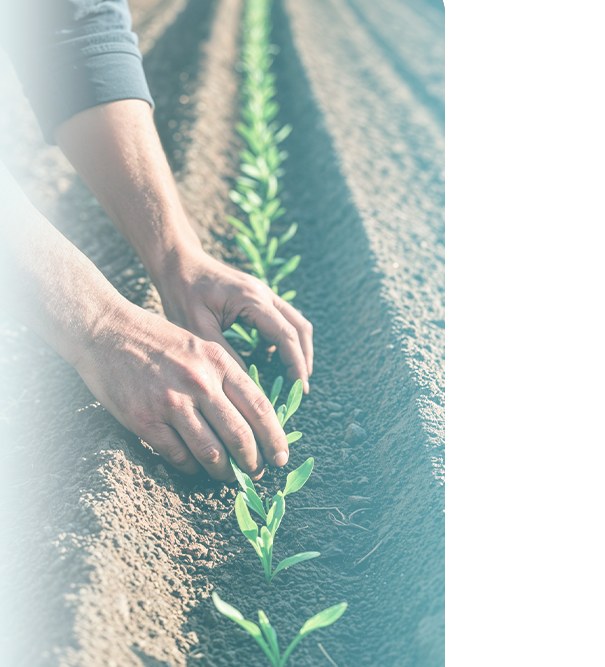
Agriculture faces an equation with no simple answer: producing more, with less impact, under increasingly unpredictable climate conditions. Around the world, producers, distributors, and buyers seek technologies that work within this reality — not as an alternative to conventional management, but as an intelligent part of it.
Brazilian bioinputs bring something rare to this conversation: a proven track record inside the world's largest production systems. In Brazil, they are already part of the standard management for major crops, reinforcing the role of technological complementarity.
A survey of 3,000 consumers in five European countries, conducted by IPRI in partnership with CropLife Brasil (2023), reveals a consistent pattern: those already familiar with Brazilian products rate national agribusiness substantially better. The difference is not in the product — it is in the awareness of what it represents.
Of Spaniards consider it important to know the origin of their food.
IPRI | CropLife Brasil, 2023
Are willing to pay more for environmentally sustainable food.
IPRI | CropLife Brasil, 2023
Invested by the EU's CAP 2023–2027 in the European agricultural transition.
European Commission
Source: IPRI / CropLife Brasil — Sustainable Consumption Survey in the European Market, November 2023.
At COP30, CropLife Brasil and IICA launched the document “Caminhos do Agro: Innovation for the Climate,” showing how the combination of bioinputs, no-till farming, pasture recovery, and biotechnology positions Brazilian agribusiness as an active part of the global climate solution.
Bioinputs integrated into management reduce emissions, improve soil health, and increase crop resilience to extreme weather events. This is the argument that connects productivity and sustainability — without choosing a side.
Source: CropLife Brasil / IICA — Caminhos do Agro: Innovation for the Climate, COP30, 2025.
| Market | Growth |
|---|---|
| México | CAGR 10.5% |
| EUA | CAGR 7.5% |
| Argentina | CAGR 8.7% |
| France | CAGR 8% |
| Chile | CAGR 11.1% |
| Spain | CAGR 8.5% |
| Italy | CAGR 9.5% |
Source: S&P Global Commodity Insights — October 2025.
| Global Segment (S&P Global, 2024) | Advantage for Brazil |
|---|---|
| Biocontrol — US$ 4 billion (46%) | Dominance in bioinsecticides, biofungicides, and bionematicides for tropical and subtropical climates. |
| Biostimulants — US$ 3.3 billion (38%) | Growth in amino acids and natural extracts; Brazilian expertise in tropical species. |
| Inoculants — US$ 1.4 billion (16%) | Global reference for Brazil; saves the country US$ 14 billion/year in fertilizer costs (Embrapa). |
| Semiochemicals — CAGR 10% (fastest) | Fast-growing segment with increasing European regulatory demand. |
| Bionematicides — mature in BR | Biological share grew from 6% to roughly 75% of the nematicide market in seven years — an exportable success case. |